Pastiche, homage and parody are all similar styles but there are slight differences which differentiate them from one another.
Pastiche is defined as 'a medley of various ingredients; a hotchpotch, farrago, jumble'. It is a style which is a tongue-in-cheek light-hearted imitation of another's style which unlike a parody is respectful. Star Wars has been considered as a pastiche of traditional science fiction television and radio shows. Tarantino's films are also often considered as pastiche because of how they mis together a variety of different styles and generic convention. The theorist Jameson said that we imitate old dead styles from the past through pastiche.
A parody is a work which mimic in an absurd or ridiculous way the conventions and style of another work. It aims to ridicule, derive ironic comment or affectionate fun. There are many examples of parody in television and film, such as the Scary Movie films and the film The Starving Games. There are also more subtle versions of parody such as the imitation of Antonio Banderas of himself as Puss in Boots in Shrek.
Homage is a text which pays respect to another text or style. It is usually used by creatives to pay respect to those who have influenced them. An example is the television series Sherlock which is based upon the original Arthur Conan Doyle stories but set in modern day. The creators of the show, Steven Moffat and Mark Gatiss, were childhood fans of Sherlock Holmes and Conan Doyle, they use Sherlock as a way to honour and pay respect to the stories that they grew up loving.
A metanarrative put simply is a big story off which people base their beliefs, the most well known metanarrative is the bible and religion. Other examples of metanarratives include science, art and modernism, they are narratives which make universal and all-embracing claims of knowledge and truth. It is believed that in the postmodern world metanarratives are beginning to decline and are less important to people's lives. Postmodernism is very skeptical of the metanarratives and believes that they are open to criticism, the validity of the metanarratives is beginning to decline.
Whats next?...
Lyotard proposed that the metanarratives should give way to smaller localised narratives. Postmodernists attempt to replace the metanarratives by focusing on local contexts and the diversity of different peoples experiences. They believe that there are a series of smaller narratives rather than just one all-encompassing narrative.
I think that Lyotard's theory can be seen in many different media as I believe that the metanarratives are no longer used as much in media. Metanarratives are becoming a smaller part of many peoples lives, for example churches in England have been in decline since the 1950s with an estimated 1 million giving up church going in the 1990s alone. Only 7.5% of the UK's population attended church regularly in 1998. I think that the media is coming to reflect this change which is leading to a decline of metanarratives.
With the decline of metanarratives I believe that we are seeing the creation of smaller narratives which better represent smaller minorities. An example of this is the Jedi census phenomenon. On 2001 many residents recorded their religion as "Jedi" or "Jedi Knight" on the national census. In England and Wales the national census revealed the religious affiliations as being: 70% Christian, 14.7% no religion, 3.1% 7.8% chose no response, Muslim, 2.1% Hindu and 0.7% Jedi. In 2011 176,632 people responded as Jedi. This suggests that people are choosing to identify with stories/narratives that better appeal to them and that are more relevant.

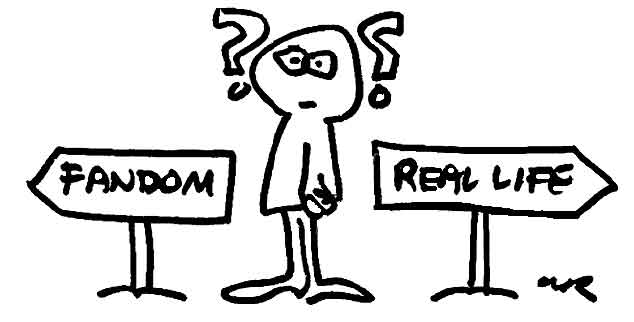
I thin that this can also be seen in pop culture among teenagers and the rise in popularity of 'fandoms'. A 'fandom' is a term used to refer to a subculture composed of fans characterised by a feeling of empathy and camaraderie with others who share a common interest. It is suggested that the first fandom was compromised of fans of Sherlock Holmes. Public demonstrations of mourning after Holmes was "killed off" in 1893 were held and some of the first fan fiction was created as early as 1897-1902.
Useful links:
http://news.bbc.co.uk/1/hi/uk/5349132.stm
http://www.vexen.co.uk/UK/religion.html